
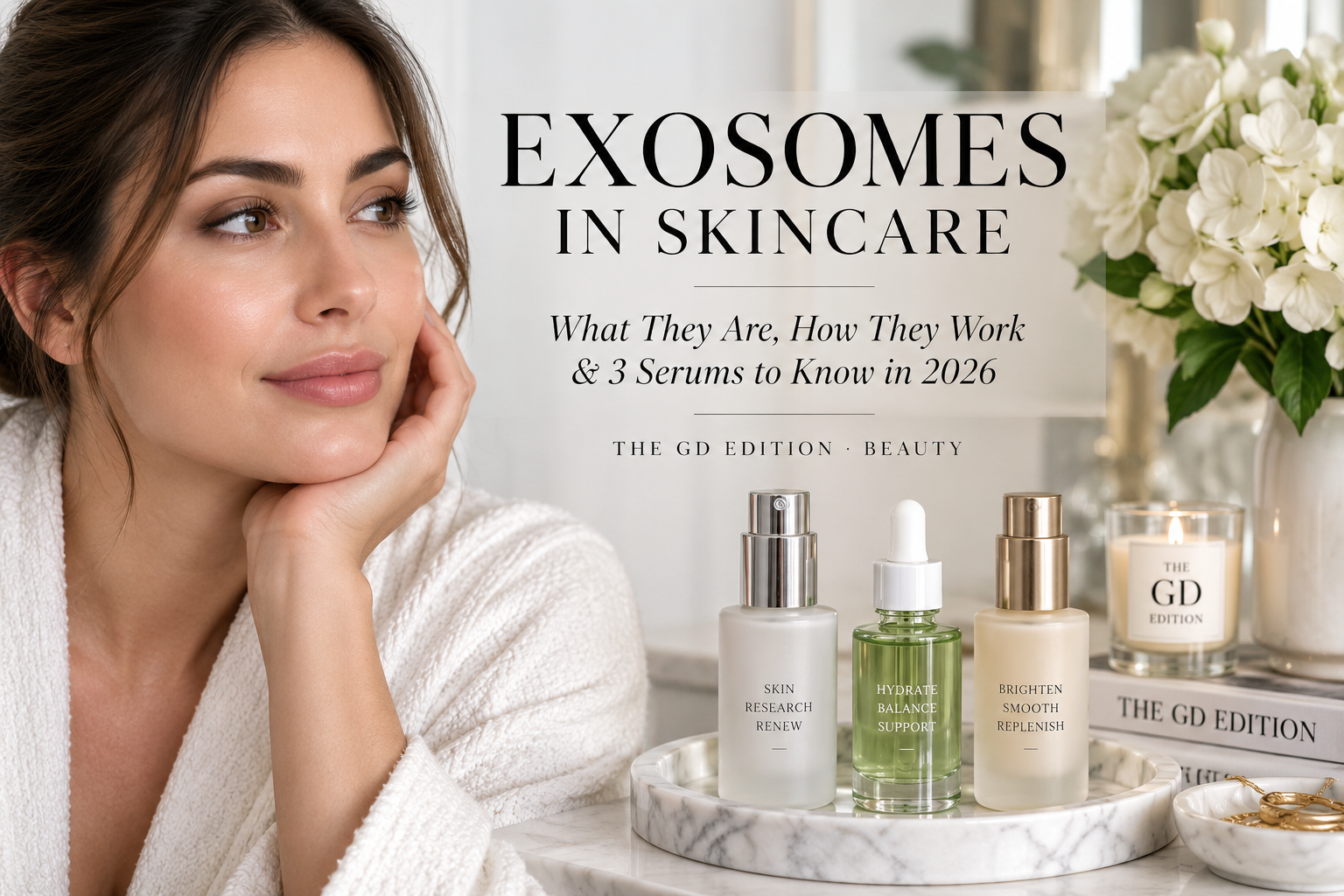
BEAUTY / THE GD EDITION · SEPTEMBER 16, 2026
Exosomes in Skincare: What They Are, How They Work & 3 Serums to Know in 2026
Exosomes are quickly becoming one of the most talked-about ingredients in skincare, showing up in everything from hydrating serums to Korean beauty treatments that target texture and the appearance of fine lines. But despite all the buzz, exosomes are still widely misunderstood—and not every product using exosome technology works the same way.
So, what exactly are exosomes, and what can they realistically do for your skin? Below, we break down what the current research tells us, what to know before adding an exosome product to your routine, and three formulas worth knowing in 2026—from The INKEY List, Naturium, and Medicube.
What Are Exosomes in Skincare?
Exosomes are tiny extracellular vesicles—microscopic structures released by cells that help carry signals and biological materials from one cell to another. Think of them as small messengers that play a role in how cells communicate. That communication is one reason exosomes have attracted so much attention in medical research and, more recently, in skincare.
In topical skincare, the term “exosome” can refer to different technologies and sources, so not every exosome product is the same. Some formulas use plant-derived extracellular vesicles, while others use biomimetic or microorganism-derived vesicles. The idea is to support processes associated with healthier-looking skin, but the source of the vesicles, the rest of the formula, and how the product is delivered all matter.
How Do Exosomes Work in Skincare?
Think of exosomes as tiny messengers. They can carry proteins, fats and other materials that cells use to communicate with one another. This ability to carry biological signals is one of the reasons researchers have become interested in their potential role in skin health.
Early research has explored whether exosome-based treatments may help support processes related to hydration, elasticity, collagen production, uneven pigmentation and the appearance of fine lines and wrinkles. But skincare products can use different types of exosome technology, and the other ingredients in a formula matter too. In other words, simply seeing the word “exosome” on a bottle doesn’t guarantee better results.
Do Exosomes in Skincare Actually Work?
So far, the research is encouraging—but exosomes are still a relatively new area of skincare. Some studies have reported improvements in hydration, elasticity, texture, pigmentation and the appearance of wrinkles, but human studies are still limited, and researchers have not yet established one standard way to formulate or use topical exosomes.
That’s why it makes sense to think of exosomes as an emerging skincare technology rather than a miracle ingredient. They may be an interesting addition to a well-rounded routine, but they haven’t replaced proven essentials such as sunscreen, retinoids or vitamin C.
Not All Exosome Skincare Is the Same
One of the most important things to know before shopping for exosome skincare is that “exosome” doesn’t describe one single ingredient. Products may use different types of extracellular vesicles, derived from different sources and formulated in very different ways.
For example, some skincare formulas use plant-derived vesicles, while others use biomimetic technology or vesicles associated with microorganisms. And an exosome product is rarely just about the exosomes—the supporting ingredients can make a big difference in what the formula is designed to do. Hydrating ingredients, peptides, niacinamide and other actives may all contribute to the results you see.
That’s exactly why it’s worth looking beyond the word “exosome” on the front of the bottle. The three products below take noticeably different approaches, making them useful examples of how varied this emerging skincare category has become.
3 Exosome Skincare Products to Know in 2026
Medicube One Day Exosome Shot 7500
Medicube’s One Day Exosome Shot 7500 is the most intensive—and the most unusual—of the three products in this edit. Unlike a traditional serum that simply glides over the skin, this Korean skincare treatment uses microscopic spicules made from hydrolyzed sponge. These tiny, needle-like particles are designed to help deliver the formula while targeting the look of enlarged pores and uneven texture.
The formula contains Lactobacillus extracellular vesicles, along with niacinamide, panthenol and exfoliating acids including BHA and PHA. That combination makes this product particularly focused on texture, pores and overall skin smoothness rather than hydration alone.
There is one important thing to know before trying it: the spicules can create a prickly or tingling sensation on the skin. Medicube recommends avoiding the eye and lip areas and suggests a patch test for sensitive or delicate skin. If you’re completely new to spicule-based skincare, Medicube also offers a lower-strength One Day Exosome Shot 2000.
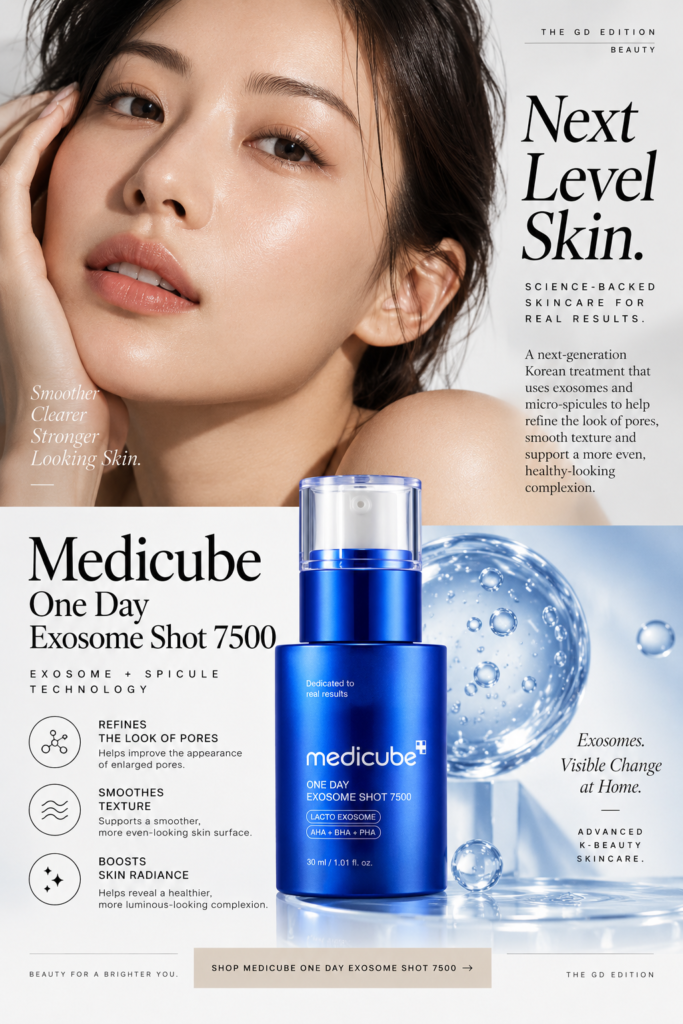
Worth knowing: This isn’t your typical hydrating serum. It makes more sense for someone interested in the appearance of pores and uneven texture—and comfortable trying a more intensive skincare treatment.
The INKEY List Exosome Hydro-Glow Complex Serum
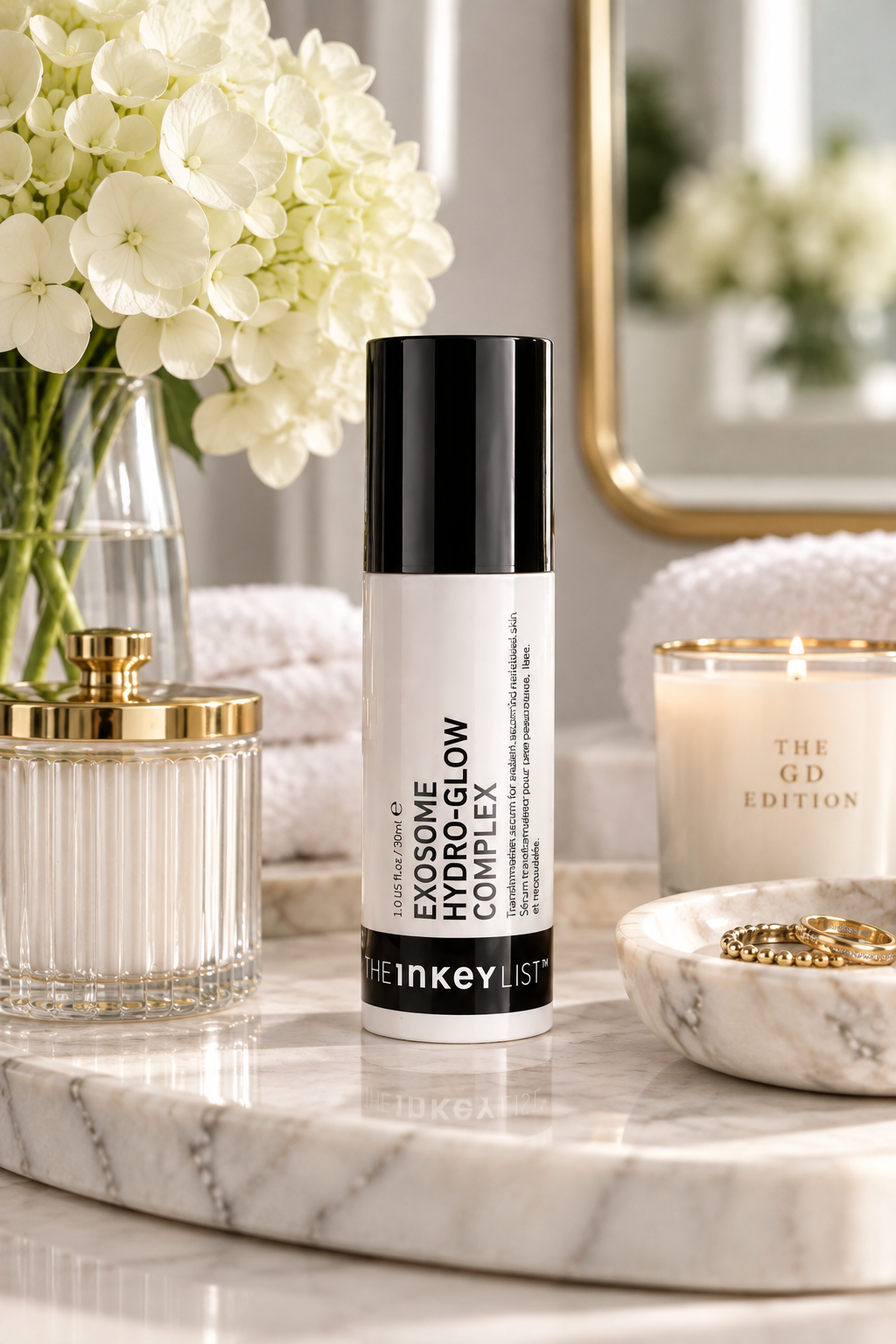
A GENTLER TAKE ON EXOSOMES
Unlike the more intensive spicule-based treatment above, The INKEY List Exosome Hydro-Glow Complex takes a more traditional serum approach. Its formula features 1% plant-derived Cica exosomes sourced from Centella asiatica, alongside 1% hyaluronic acid, 1% ectoin, Tripeptide-1, prickly pear extract and antioxidant Q10—a combination designed to support hydration, radiance and smoother-looking skin.
THE CLAIMS
The INKEY List reports that in a 4-week clinical study of 26 participants, the formula improved measures of radiance, hydration, tone, firmness, elasticity and texture. The brand also reports hydration lasting up to 12 hours. These results are encouraging, though they remain brand-reported findings from a relatively small study.
THE GD EDIT
At around $24 for 30 ml, this is an approachable way to explore the exosome-skincare category without moving into an intensive spicule treatment. It may be especially appealing if your priorities are glow, hydration and smoother-looking skin.
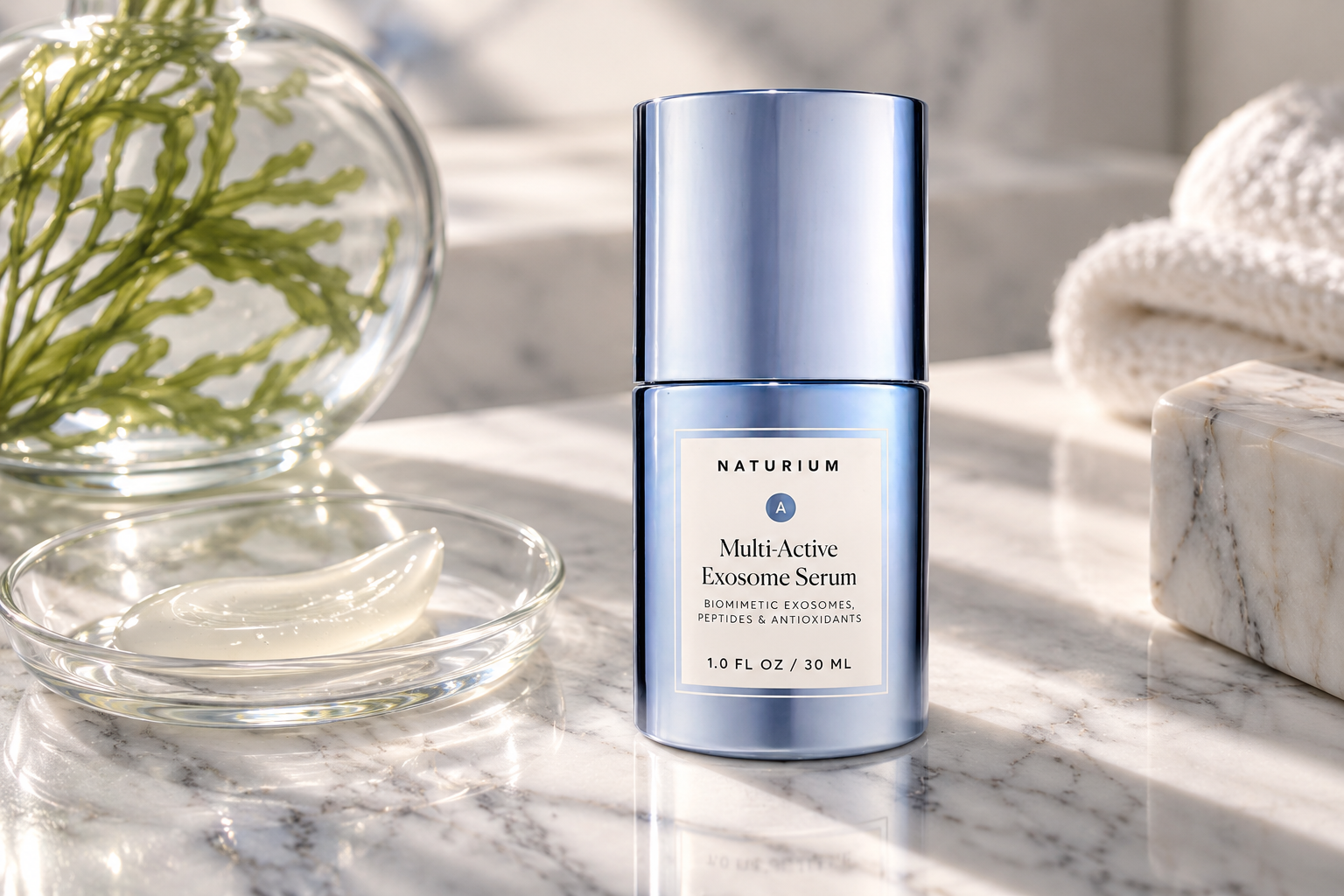
Naturium Multi-Active Exosome Serum
A BIOMIMETIC APPROACH
Naturium takes a different approach to the exosome trend with microalgae-derived biomimetic exosomes—plant-derived extracellular vesicles inspired by the skin’s natural renewal process. The formula pairs them with Hexapeptide-9, squalane and antioxidant-rich ingredients, with a focus on firmer, more elastic and smoother-looking skin.
THE CLAIMS
Naturium reports improvements in the appearance of firmness, elasticity, radiance and fine lines with continued use. The brand says 94% of participants saw a reduced look of fine lines and wrinkles after 30 days of daily use. As with the other products in this edit, these results should be viewed as brand-reported findings rather than independent evidence of the broader benefits of topical exosomes.
THE GD EDIT
At around $27 for 30 ml, Naturium offers another accessible way to explore topical exosome skincare—this time through a vegan, microalgae-derived biomimetic formula rather than a spicule-based treatment. It may be particularly interesting for someone focused on the appearance of fine lines, firmness, elasticity and radiance.
Which Exosome Serum Is Right for You?
Each of these formulas takes a different approach to the exosome-skincare trend. The right fit depends less on choosing the “most advanced” formula and more on your skin goals, tolerance and preferred skincare experience.
MEDICUBE
BEST FOR
A more intensive skincare experience focused on the appearance of pores and texture.
WHAT MAKES IT DIFFERENT
Microscopic spicules create the distinctive prickly sensation that sets this formula apart.
THE INKEY LIST
BEST FOR
Hydration, radiance and smoother-looking skin in a more traditional daily-serum format.
WHAT MAKES IT DIFFERENT
Plant-derived Cica exosomes are paired with hyaluronic acid, ectoin and supportive skincare ingredients.
NATURIUM
BEST FOR
The appearance of fine lines, firmness, elasticity and radiance.
WHAT MAKES IT DIFFERENT
Microalgae-derived biomimetic exosomes are paired with peptides and antioxidant-rich ingredients.
What Does the Research Actually Say About Exosomes in Skincare?
Research on exosomes for skin rejuvenation is promising, but still developing. A 2026 scoping review screened 2,394 articles and identified only 18 human studies evaluating topical exosomes for skin rejuvenation. While those studies reported potential improvements in areas such as collagen and elastin, wrinkles, elasticity, hydration and pigmentation, the researchers concluded that human evidence remains limited and highly variable, with important differences in exosome sources, formulations and delivery methods.
What does that mean for skincare shoppers? The word “exosome” on a label does not automatically mean that every formula works in the same way—or that results from one exosome source or delivery method apply to another. Current research includes different sources, formulations and delivery techniques, making direct comparisons difficult. For now, it makes more sense to evaluate an exosome serum by its complete formula, supporting ingredients, tolerability and available evidence, rather than by the exosome claim alone.
THE BOTTOM LINE
Exosomes are one of skincare’s most interesting emerging technologies, but the science is not yet at the point where every topical exosome product can be treated as proven or equivalent. The most sensible approach is to stay curious without getting swept up in the hype: look at the whole formula, the quality of the evidence and how well the product fits your skin.
The three formulas in this edit illustrate just how different the category can be—from Medicube’s spicule-based approach to The INKEY List’s plant-derived Cica exosomes and Naturium’s microalgae-derived biomimetic formula.
Are Exosome Serums Worth Trying?
They can be worth exploring if you’re curious about emerging skincare technology and have realistic expectations. But an “exosome” label alone isn’t a reason to buy. The formula as a whole, your skin’s needs and tolerance, and the quality of the evidence behind the product matter more than the trend itself.
Whether you prefer Medicube’s more intensive spicule-based experience, The INKEY List’s hydration-focused serum or Naturium’s biomimetic approach, think of these formulas as different ways to explore an evolving skincare category—not shortcuts to guaranteed results.
THE GD EDITION · BEAUTY
Thoughtful beauty, considered choices.
This edit is designed for informational purposes and reflects the research and product information available at the time of publication. Skincare results can vary by individual.
Affiliate Disclosure: As an Amazon Associate I earn from qualifying purchases.